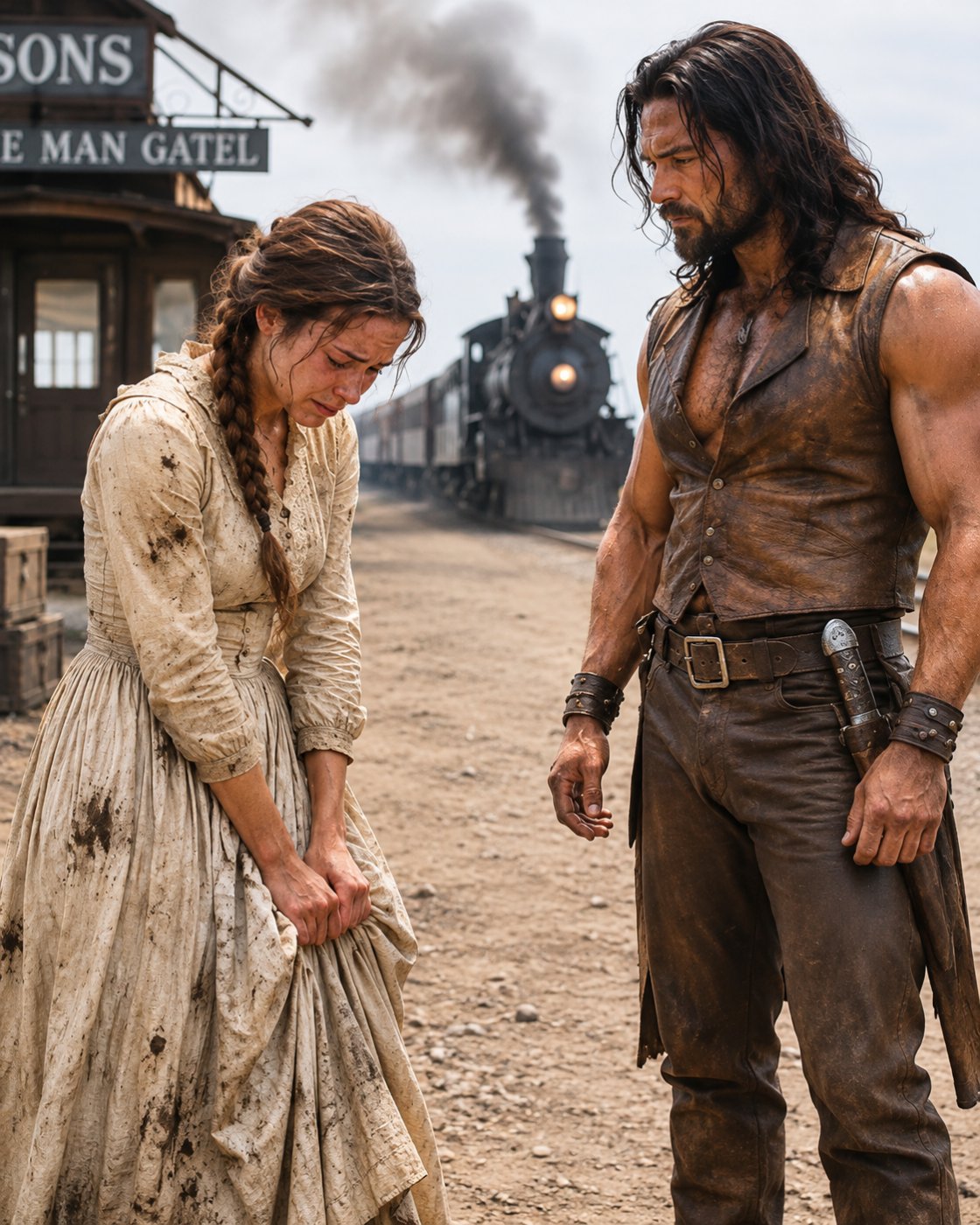
They Sent Him The Bride Nobody Wanted — The Mountain Cowboy Whispered I See Her Heart
A stagecoach rolled into the mountain settlement with one passenger everyone pitied. One sealed letter no one wanted to deliver. And one young woman, whose future had already been judged before she even stepped onto the dusty street. By sunset the townspeople expected another broken heart, another forgotten bride, and another lonely soul swallowed by the unforgiving Wild West. But high above the valley, where the wind carried only the cries of hawks and the thunder of wild horses, a mountain cowboy looked into her frightened eyes and saw something no one else had bothered to find. While the world whispered that she was unwanted, he quietly believed he had found the bravest heart in the entire frontier. Before we write any farther into this unforgettable Wild West adventure, make sure to like, comment, share, and subscribe to the last cowboy if you love legendary cowboy tales, outlaw adventures, heartfelt frontier romances, and true mysteries from the American West. Your support helps keep these stories alive for everyone who loves the untamed frontier. The year was 1884 and the towering Bitterroot mountain stood like ancient guardians over miles of rugged wilderness. Below them rested the small frontier town of Dry Creek Crossing, a place built from stubborn determination and weathered timber. Dust drifted through its single street while blacksmith hammers rang against glowing steel. Horses stomped outside the saloon, ranch hands traded stories beside water troughs, and bounty posters fluttered on crooked wooden walls. Life here belonged only to those strong enough to survive it. Beyond the town stretched endless valleys covered with sagebrush, narrow rivers cutting through stone canyons, and steep mountain trails where only experienced riders dared travel. Outlaw gangs often disappeared into those heights, forcing sheriffs and bounty hunters into dangerous pursuits that rarely ended peacefully. Far above the town lived Gideon Mercer, a mountain cowboy whose ranch alone on a wide meadow surrounded by pine forests and granite cliffs. Gideon was known throughout three counties as a quiet man who preferred honest work over noisy conversation. He had built every fence with his own hands, rescued abandoned horses no one else wanted, and never turned away a traveler needing water or shelter. Yet despite his respected reputation, loneliness had settled around him like the mountain fog. His parents had passed years before, and the ranch demanded more work than one man could manage forever. Friends encouraged him to seek a mail order bride, believing only a family could keep the isolated ranch alive for another generation. After months of careful thought, Gideon finally agreed. He wrote one simple letter explaining that he sought kindness more than beauty, courage more than wealth, and loyalty more than perfection. The matchmaking office accepted his request, promising to find someone suitable. Weeks passed before another letter arrived informing him that a bride had been chosen and would arrive by stagecoach at Dry Creek, crossing before noon on the first Monday of September. What Gideon never learned was that several women had refused the match after hearing about the isolated mountain ranch. Others dismissed him simply because he owned no grand estate or fashionable home. Eventually, the agency selected Eleanor Ashford, a young woman who had quietly become the bride nobody wanted. Eleanor carried burdens invisible to strangers. During a devastating cholera outbreak years earlier, she had lost nearly everyone she loved. Forced into factory work in the eastern cities, she endured endless hardship before deciding that any honest future in the West offered more hope than remaining, where every street reminded her of loss. Yet cruel rumors followed her. Some believed tragedy surrounded her wherever she went. Others unfairly judged the faint scar crossing one side of her face earned while saving a frightened child from a collapsing warehouse. Families rejected her without asking who she truly was. Even other women seeking husbands often treated her as if misfortune itself traveled beside her. When the stage coach finally stopped outside the general store, curious townspeople watched from every direction. Eleanor stepped down wearing a modest blue traveling dress covered with trail dust. She held a worn leather satchel and a carefully wrapped family bible, the only heirloom she still possessed. Her tired eyes searched the unfamiliar faces expecting disappointment before anyone spoke. Whispers drifted through the crowd as people noticed the scar and the anxious uncertainty she struggled to hide. Gideon approached quietly, removing his hat with genuine respect. He looked beyond the dust, beyond the scar, beyond the fearful expression everyone else seemed eager to judge. What he noticed instead were the calluses on her hands from years of honest labor and the determined strength with which she carried herself. Despite obvious exhaustion, in that single moment he understood she had survived battles few people could imagine. He accepted her luggage without hesitation and as they began walking toward his wagon, the old station keeper later swore that Gideon softly murmured only six unforgettable words. He said that he could see her heart. The journey toward the mountain ranch lasted most of the afternoon beneath bright blue skies. Sunlight shimmered across rocky rivers while hawks circled high above endless ridges. Gideon spoke little, not from coldness but from careful thought allowing Eleanor space to breathe after weeks of difficult travel. Instead of awkward silence, they found comfort in peaceful moments. He pointed toward distant elk grazing near forest edges explained where spring water flowed year round and introduced every horse by name as though they were trusted friends. Eleanor slowly realized this mountain cowboy treated every living creature with quiet dignity. Their growing understanding faced its first trial before reaching the ranch. Smoke rose unexpectedly from a lower valley where frightened settlers raced toward the road. An outlaw gang known as the Black Mesa riders had raided supply wagons all summer, stealing livestock and forcing ranchers to abandon isolated homesteads. Led by the ruthless Silas Crow, the gang believed fear was more valuable than stolen gold because terrified communities surrendered without resistance. That afternoon they had robbed another freight convoy carrying winter provisions into the mountains. Gideon immediately guided Eleanor behind large boulders while several armed riders thundered across the valley below. Rather than charging recklessly, he studied their movements patiently. Eleanor noticed he valued survival above reckless heroics. Once the gang disappeared into a narrow canyon, Gideon helped frightened settlers, gather scattered supplies before escorting everyone safely toward town. Eleanor worked tirelessly beside him, comforting frightened children, bandaging injured teamsters, and calming terrified horses that had broken free during the attack. By sunset, everyone recognized that the supposedly unwanted bride possessed remarkable courage under pressure. Word of her actions spread quickly through Dry Creek Crossing. Sheriff Nathan Holloway soon visited Gideon's ranch seeking help. The sheriff explained that Silas Crow intended to seize an abandoned Silver Pass leading across the mountains. Whoever controlled the trail could rob every stagecoach traveling between settlements before winter snow closed alternative routes. The sheriff lacked enough deputies to guard every canyon, while bounty hunters arriving from neighboring territories cared more about reward money than protecting innocent families. Gideon agreed to assist, knowing the mountain better than anyone alive. Eleanor surprised everyone by insisting on helping as well. Years of difficult survival had taught her practical skills beyond cooking and housekeeping. She could read maps, organize supplies, repair torn clothing, and keep detailed records that proved invaluable during long expeditions. Rather than treating her as someone needing protection, Gideon trusted her judgment completely. That simple confidence transformed something inside Eleanor that years of rejection had nearly destroyed. Over the following days, the ranch became headquarters for local volunteers. Cowboys from neighboring spreads arrived leading strong horses loaded with food and ammunition. A respected native scout from a nearby tribal community named Running Cedar joined the effort after learning the outlaws had frightened hunters and damaged important game trails. His knowledge of hidden mountain paths proved invaluable, and Gideon treated him as an equal partner rather than merely a guide. Together, they developed a careful strategy focused on protecting travelers instead of seeking unnecessary bloodshed. While others prepared defenses, Eleanor noticed something unusual among several captured supply crates recovered after earlier robberies. One wooden box carried fresh sawdust unlike the others. Examining it closely, she discovered hidden maps beneath a false bottom. Those maps revealed that Silas Crow planned to ambush not only stagecoaches but also a government survey team carrying official land records. Destroying those records would allow dishonest speculators secretly working with the gang to claim valuable ranches throughout the valley. The discovery changed everything. Sheriff Holloway immediately organized a defensive force while Gideon led experienced riders through little-known mountain passes to intercept the gang before they reached the survey convoy. Eleanor remained at headquarters coordinating messengers, preparing emergency supplies, and ensuring every volunteer knew their assignments. Her calm leadership impressed seasoned frontiersmen who admitted they had underestimated her from the beginning. The final confrontation unfolded beneath brilliant afternoon sunlight along Eagle Spine Pass, a narrow ridge overlooking dramatic cliffs and winding rivers hundreds of feet below.
PART 1
They Sent Him the Bride Nobody Wanted — The Mountain Cowboy Whispered, “I See Her Heart”
Montana Territory, 1884.
“That's the woman they sent Mercer? Lord help him. He waited six months for a bride, and that's what he gets?”
Eleanor Ashford heard every word as she stepped down from the stagecoach in Dry Creek Crossing. She lowered her head, hoping her bonnet would conceal the scar running along her left cheek.
At twenty-seven, Eleanor had already buried her parents, survived a cholera outbreak, and spent years working in a miserable eastern factory. The scar was a reminder of the afternoon she had carried a little girl out of a collapsing warehouse.
Yet nobody ever asked how she had gotten it.
They simply stared.
When Gideon Mercer approached, Eleanor tightened her grip on her worn leather satchel. The broad-shouldered mountain cowboy was thirty-nine, with weathered hands, dark hair, and remarkably gentle brown eyes.
“Mr. Mercer, I'm afraid the agency may not have told you everything.”
“About what, ma'am?”
She reluctantly removed her bonnet.
“About my face.”
Gideon studied her for a moment.
Then he took her satchel and offered his arm.
“I asked them to send me a woman with a good heart. I see her standing right here.”
Eleanor nearly cried.
Nobody had spoken to her with such kindness in years.
Their journey toward his secluded ranch began beneath the towering Bitterroot Mountains. Gideon told her about his rescued horses, his mother's abandoned flower garden, and the little cabin he hoped she might someday consider home.
For the first time in years, Eleanor allowed herself to imagine a future.
Then smoke appeared above the trees.
A freight convoy had been attacked by the notorious Black Mesa Riders. Supplies lay scattered across the road, horses were running loose, and a frightened child was crying beside an injured teamster.
Gideon stopped the wagon.
Before he could tell Eleanor to remain somewhere safe, she was already climbing down.
She tore strips from her underskirt to bandage the injured man, comforted the child, and approached a terrified horse with extraordinary patience.
Gideon watched her with growing admiration.
But when Eleanor helped gather the scattered freight, she discovered a broken wooden crate containing something far more troubling than stolen provisions.
Inside was a folded map bearing Gideon's name.
And beside the location of his mountain ranch, someone had written a chilling instruction in red pencil.
Eleanor suddenly understood that the man who had welcomed her without hesitation was in terrible danger.
What she discovered next would change both their lives.
Continue reading PART 2 in the first comment below.
PART 2
Gideon examined the map beneath the fading afternoon light. Several mountain properties had been marked, including his own ranch. Beside each appeared a date, a number, and the initials of someone neither of them recognized. He folded the paper carefully and told Eleanor they needed to speak with Sheriff Nathan Holloway before returning home.
The sheriff revealed that Silas Crow, leader of the Black Mesa Riders, had been terrorizing freight companies throughout the summer. But the marked properties suggested something more organized than ordinary robbery. Someone appeared to be using the gang to frighten ranchers into abandoning valuable land before winter.
That evening, Gideon brought Eleanor to his cabin. She expected him to discuss their marriage arrangements immediately. Instead, he showed her a private bedroom, placed fresh towels beside the washbasin, and told her she could take as much time as she needed before deciding whether to marry him.
“After everything you've paid to bring me here?” she asked. Gideon shook his head. “I paid for your journey, Eleanor. I didn't purchase your future.” Those words touched her more deeply than any promise of romance could have.
Over the following days, Eleanor discovered that Gideon was a man of quiet tenderness. He remembered how she liked her tea, repaired the broken clasp on her satchel, and never looked away when she removed her bonnet. One evening, she caught him watching her across the supper table. “Does my scar trouble you?” she whispered. “Only when I think about how much it must have hurt,” he answered.
Meanwhile, Sheriff Holloway established a temporary headquarters at the ranch. A respected Native scout named Running Cedar joined the investigation, bringing knowledge of the mountain trails and reports of suspicious activity near Silver Pass. Eleanor organized supplies and examined recovered freight records while the men investigated the surrounding territory.